
Porcelain Countertops in Massachusetts
The newest material in the warehouse, and the one where your fabricator matters most.
Porcelain countertops are large-format slabs of the same material as high-end tile, fired at over 2,000 degrees into a surface harder than granite. Europe has been building kitchens with it for years. It's now showing up in Massachusetts warehouses, and for the right project it's a serious option.
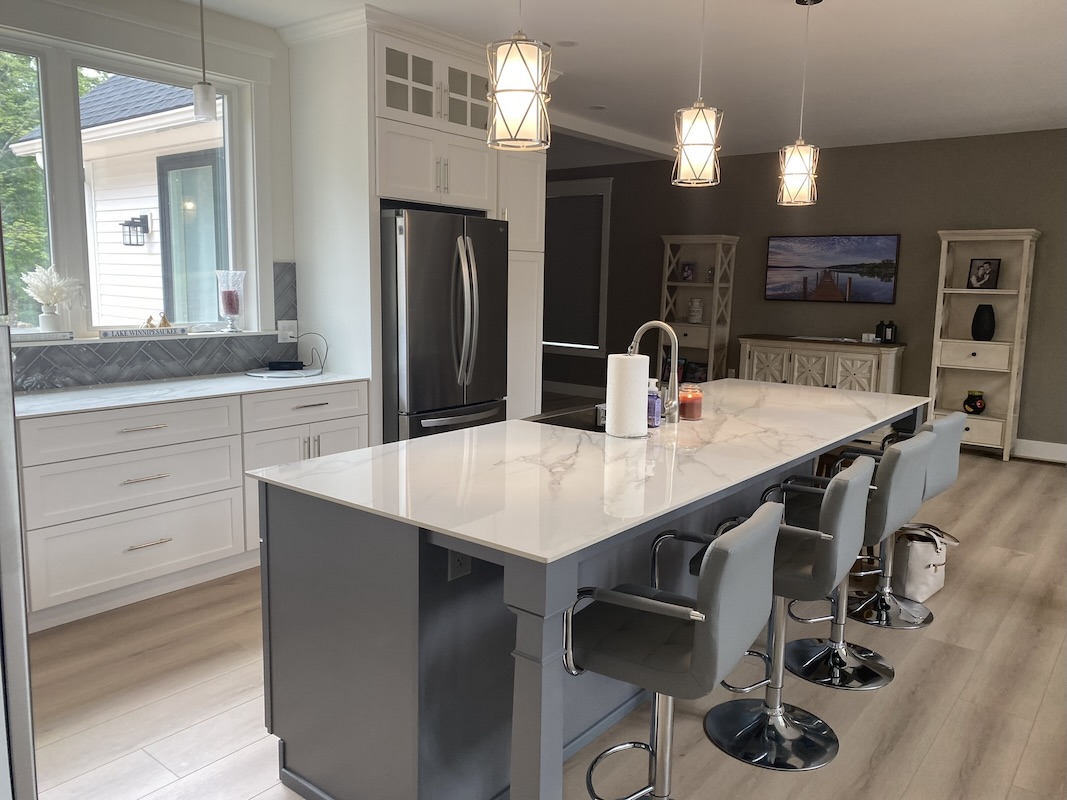
The material's case is simple: it doesn't scorch, doesn't stain, doesn't etch, doesn't fade in sunlight, and never needs sealing. It also comes in enormous slabs with thin profiles, which is what makes the crisp, mitered waterfall looks possible.
The catch is fabrication. Porcelain is unforgiving to cut, and the edge work is where jobs succeed or fail.
Most porcelain slabs are thin, so the finished look is built with mitered edges: two pieces joined at 45 degrees to create a thick, solid appearance. Done well, you can't find the joint. Done poorly, you can't miss it. That's why choosing porcelain is really choosing a fabricator.
Where Porcelain Makes Sense
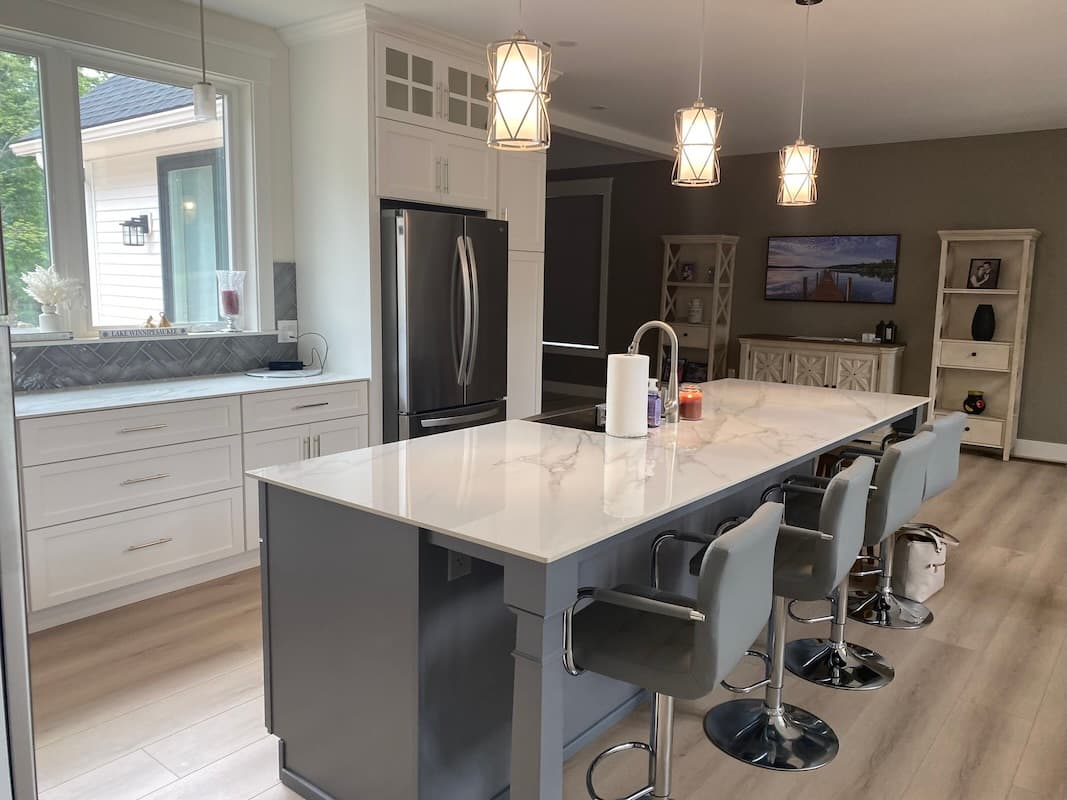
Modern kitchens chasing a seamless, architectural look are porcelain's home turf. Waterfall islands, full-height backsplashes cut from the same slab, and thin-profile counters that natural stone can't match.
It's also the one countertop we'd put outdoors without hesitation. Porcelain is UV-stable, so an outdoor kitchen or grill surround won't fade the way quartz does in sunlight.
The honest limitation: on most slabs the veining is printed on the surface rather than running through the body of the material. Edges and cutouts need thoughtful pattern matching, and we show you the layout before anything is cut. If full-depth natural veining matters to you, that's quartzite or marble territory.
We've installed porcelain as far north as New Hampshire, including a mitered island that convinced the neighbors to call us. The material travels well. The skill has to come with it.
What Porcelain Costs
Here is a real number to anchor on: an average-size kitchen in porcelain with mitered edge details generally runs about $9,800 installed. The miter work is included in that number because on most porcelain jobs it isn't optional; it's what creates the thick, solid look from a thin slab.
That puts porcelain just under quartzite's $10,000-plus and above soapstone at $8,500. You're paying for labor and skill more than material, which is the reverse of most stone jobs, and it's exactly why the cheap porcelain quote should worry you.
Anyone who quotes you a flat per-square-foot number before seeing your kitchen is guessing. We wrote about why. You'll get a real number from us based on your dimensions, your edge details, and your layout, before anything is cut.
How It Works
Same process as every Stone Concepts project. No showroom required.
Call Bill. Send photos.
Tell him about your kitchen and the look you're after. You'll get a personalized video estimate with real pricing, including the edge details. No in-home visit required.
Pick your slab at the warehouse.
Bill sends you to the right warehouse, briefed on your project and budget. With porcelain, what you see on the slab is exactly what arrives in your kitchen.
See the layout. Approve. Done.
Bill maps your slab onto your exact kitchen, edges and pattern matching included, before a single cut. You approve it, we fabricate and install. Most projects finish in 2 to 3 weeks.
Thinking About Porcelain?
This is a big decision, and with porcelain the fabricator is most of it. Call or text Bill at (978) 568-1911 and ask the hard questions about edge work. You should ask them of anyone quoting this material.