
Your Backsplash Is a Decision. Most People Treat It Like an Afterthought.
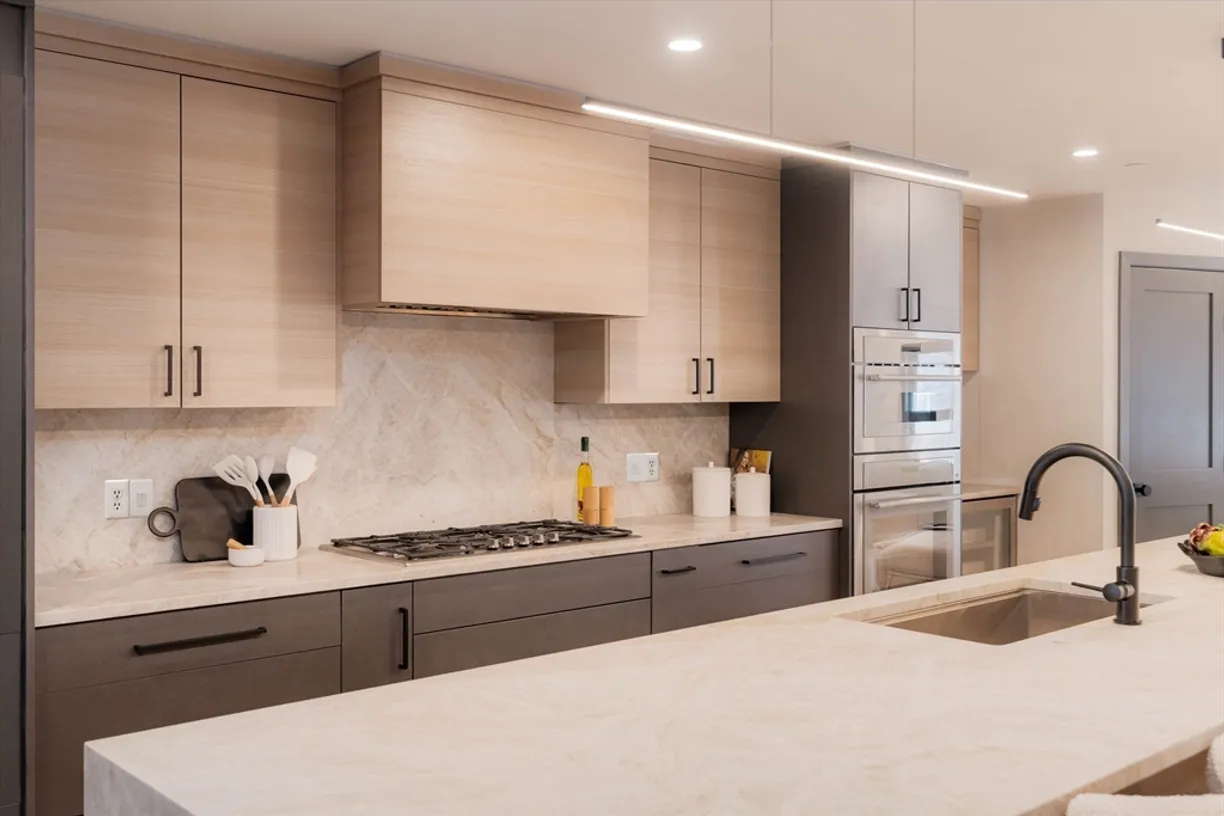
You picked the counter.
You spent a month on it. You compared slabs. You scrolled Pinterest until your eyes hurt.
Then someone asked about the backsplash.
You said tile. Probably subway. Maybe something more interesting if you'd been on Pinterest a few weeks longer.
That's where most kitchens stop thinking about the backsplash.
What the wall behind the sink actually does
You stand at the sink. You stare at the wall.
Not for thirty seconds. For ten or fifteen minutes a day, every day, for the next ten or fifteen years.
That's the surface you picked in five minutes at the end of a long meeting with a designer.
It's also the surface that has to agree with the counter you just spent a month choosing. When the wall and the counter argue with each other, the kitchen feels off — and most people can't say why.
The shift toward slab backsplashes
Tile has been the default for forty years. It works. It always will.
But something is changing.
The National Kitchen and Bath Association reports that 75% of designers and remodelers see slab backsplashes gaining popularity. That's three out of four professionals saying the same thing.
A slab backsplash is what it sounds like. Instead of tile, you run the same stone from the counter up the wall — sometimes to the bottom of the cabinets, sometimes all the way to the ceiling.
The counter and the wall agree.
Why people are doing it
The visual is the obvious reason. The veining flows from horizontal to vertical. Your eye reads the kitchen as one surface instead of two competing ones.
The cleaning is the quieter reason.
Tile has grout. Grout collects splash from the cooktop, oil from the pan, soap from the sink. You scrub it. You bleach it. Eventually you regrout it.
Slab has none of that. You wipe it down like you wipe down the counter. That's it.
For a busy kitchen, that adds up.
What it costs
A slab backsplash uses more material. There's no getting around that.
For a typical kitchen, the upgrade from a 4-inch stone splash to a full-height slab adds somewhere in the range of $1,500 to $4,000 depending on the stone and the wall area. Some quartzites and exotic granites push higher.
That's not nothing. But it's also not the cost of redoing the kitchen.
If the counter is the headline, the backsplash is the photograph behind the headline. Most people who do it once never go back to tile.
When tile still makes sense
Tile is not the wrong answer. It's still the right answer for plenty of kitchens.
If you want pattern, color, or texture the stone can't give you, tile delivers. If you want a more traditional look, tile fits. If the budget doesn't stretch, tile is honest and well-made.
The mistake is not picking tile. The mistake is picking tile because nobody asked you the other question.
Quote it both ways
When you call us for a counter, ask for two prices.
One with a 4-inch backsplash. One with a full slab. Sometimes a third with a partial slab behind the cooktop only.
Then look at the numbers and the photos side by side. Decide with both pieces in front of you.
That's the part most people skip.
The counter and the wall should agree. Pick what you want to look at.