
They Bought the One They Called "Fine"
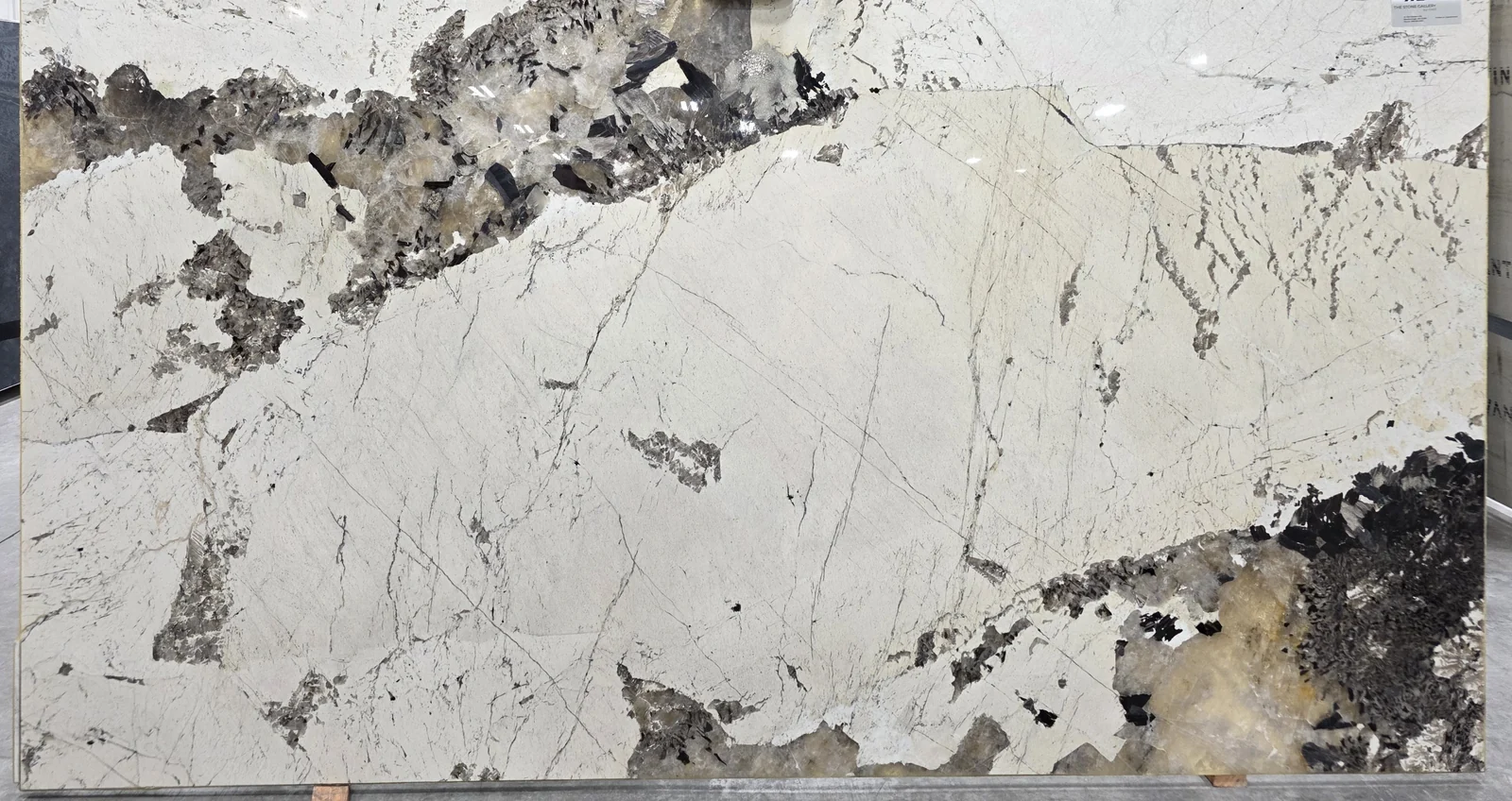
They found it in the second warehouse. A granite slab with a copper vein running diagonally across it. She kept circling back to it. He took a photo. They stood there a while.
Then they went home and started reading.
Three weeks later they ordered a quartz that, standing in that same warehouse, they had described as fine.
That is the part of this job that gets to me.
The Argument Is Already Over. Both Sides Won.
Quartz and granite have competed head to head in American kitchens for more than twenty years. Two decades of homeowners, fabricators, designers, and builders all testing both materials in real houses.
If one were meaningfully better, that would be finished by now. One would have won.
Instead, granite still holds about 28 percent of the US countertop market and 2026 reports describe a granite resurgence. In the same year, the National Kitchen and Bath Association found 78 percent of industry professionals expecting quartz to be the most popular surface.
Both materials are growing. Both are winning.
That is not what an unresolved performance question looks like. That is what a settled taste question looks like.
A Comparison Table Has to Find Differences
So why does it still feel like a hard decision?
Because of how the information reaches you.
Every article on this subject is built around a table. Heat resistance, stain resistance, maintenance, durability, cost. Row after row.
A table has to show differences. Rows that read the same on both sides look like a mistake, so nobody publishes one. Every row gets a distinction, whether or not that distinction will ever touch your life.
The format creates the impression of a close call. Then you spend three weeks studying it.
Let me take the three rows people actually lose sleep over.
Chipping: Identical
Everything chips.
Quartz chips. Granite chips. Quartzite chips. Porcelain chips, and porcelain chips more easily than either of the other two. Catch the edge of a countertop with a cast iron pan and you will damage it, and the label on the slab will not change that.
There is no winner in this row. There is only an edge and a heavy object.
Heat: Different Numbers, Same Instruction
Here the specs genuinely do differ, and it still does not matter.
The resin in quartz starts to be at risk somewhere around 300 degrees. Granite tolerates far more than that. On paper, granite wins clearly.
Now put it in a kitchen. A cookie sheet coming out of a 375 degree oven is already past what quartz wants. So what do you do with granite? You use a trivet. What do you do with quartz? You use a trivet.
Same instruction. Every time. In every kitchen.
We managed this with laminate for forty years and nobody wrote articles about it. You did not set a roasting pan straight down on Formica either.
The gap between 300 degrees and 450 degrees only matters to someone who plans to break the rule. If that is you, buy granite. If it is not, this row is empty.
Sealing: Twenty Minutes, Twice a Decade
This is the one that scares people most, and it is the smallest of the three.
Any decent fabricator seals your natural stone at installation. That holds five to seven years.
Then you reseal. Wipe it on. Wait twenty minutes. Wipe it off.
That is the maintenance nightmare. That is the whole thing.
The Arithmetic Nobody Runs
Let me put fifteen years of ownership in front of you.
Fifteen years of granite means two or three resealings. At twenty minutes each, call it an hour of your life. Total.
Fifteen years of any countertop means walking into that kitchen five or six times a day. Coffee. Lunch. Dinner. A glass of water at eleven at night.
One hour of maintenance. Around 30,000 looks. That is the actual trade you are weighing when you talk yourself out of the slab you loved.
Now ask which mistake you can recover from.
Pick the material with slightly more upkeep and love the counter, and you spend an hour with a bottle of sealer sometime around year six. You will not remember doing it.
Pick the material with slightly less upkeep and settle on the look, and you get reminded 30,000 times.
One of those is an inconvenience. The other one is a kitchen you walk into every morning and feel nothing about.
Where the Differences Are Real
I am not going to pretend the materials are the same. Three places the difference is worth your attention.
- Outdoors and direct sun. Quartz resin can discolor under sustained UV. For an outdoor kitchen or a counter in relentless sunlight, granite is the better choice, and this one is not close.
- Budget. Granite and quartz overlap heavily on price, and the low end of granite is the best value in the market. If the number is tight, look at granite first.
- Quartzite. Beautiful, and a different price league. Do not put it on the same list as the other two while you are trying to compare.
Notice that none of those three is chipping, heat, or sealing.
The Question to Ask Instead
Stop asking which one is better.
Ask which one you want to look at.
Then, and only then, check whether it has any real conflict with how you live. Outdoor kitchen. Wall of south-facing glass. A budget with a hard ceiling. Those are genuine constraints and we will tell you straight if you hit one.
Short of that, the specification sheet is not going to make this decision for you. It is going to help you avoid making it.
That couple has the quartz. It is a perfectly good countertop, installed well, and it will last as long as their house.
They still mention the one with the copper vein.
Tell us the look you are after and we will find it across the 20 wholesale warehouses we buy from, in whatever material it happens to come in. If your choice has a real conflict with how you use your kitchen, we will say so. If you do want the side-by-side, our granite versus quartz comparison is here. Give us a call.