
Some Granite Should Never Be Sealed
A woman called me about her island. Absolute Black. Four years old. It had gone cloudy and blotchy, with streaks that showed up worst in the morning light. She wanted to know what had gone wrong with the stone.
Nothing had gone wrong with the stone.
She had been sealing it once a year, because that is what she had read. She did everything she was told to do. That was the problem.
The Standard Advice Skips a Step
Search this question and you get the same answer everywhere. Seal your granite once a year.
It is confident, it is easy to remember, and for a lot of kitchens it is wrong.
Granite is not one material. It is dozens of stones with wildly different densities, sold under one word. Some of them drink sealer. Some of them will not take it at all.
Telling every homeowner to seal annually is like telling every driver to change their oil every thousand miles. It sounds responsible. It is not based on your car.
There is a test. It takes fifteen minutes and costs nothing.
The Water Test
- Pour a small puddle of water on the counter, about the size of a silver dollar. Do it in a few different spots, especially near the sink and the cooktop where wear is heaviest.
- Leave it fifteen minutes.
- Wipe it up and look at the stone underneath.
If the stone darkened where the water sat, it absorbed. Time to seal.
If it looks exactly like the stone around it, your seal is intact. Do nothing.
That is the entire diagnostic. Do it once a year and you will never have to guess again.
Test near the sink. Sealer wears from use, not from time. The stone around your sink and your cooktop gets wiped down ten times more than the corner by the refrigerator. Test where the work happens, not where it looks nice.
The Granites That Never Need It
Here is the part that surprises people.
Some granite is so dense that it is effectively non-absorbent. Absolute Black and Black Galaxy are the ones I run into most. Put water on them and it will still be sitting there an hour later.
Those stones do not need sealer. Not annually. Not ever.
And if you put sealer on them anyway, it has nowhere to go. An impregnating sealer is designed to soak in. On a stone that will not absorb, it sits on the surface and dries there.
That is the cloudy blotchy film. That is what happened to her island.
It is not a stain and it is not damage to the granite. It is a layer of dried product sitting on top of a perfectly good countertop, and getting it off takes acetone and a soft brush and a fair amount of patience.
Four years of doing the responsible thing.
If the Test Says Seal, Here Is the Whole Job
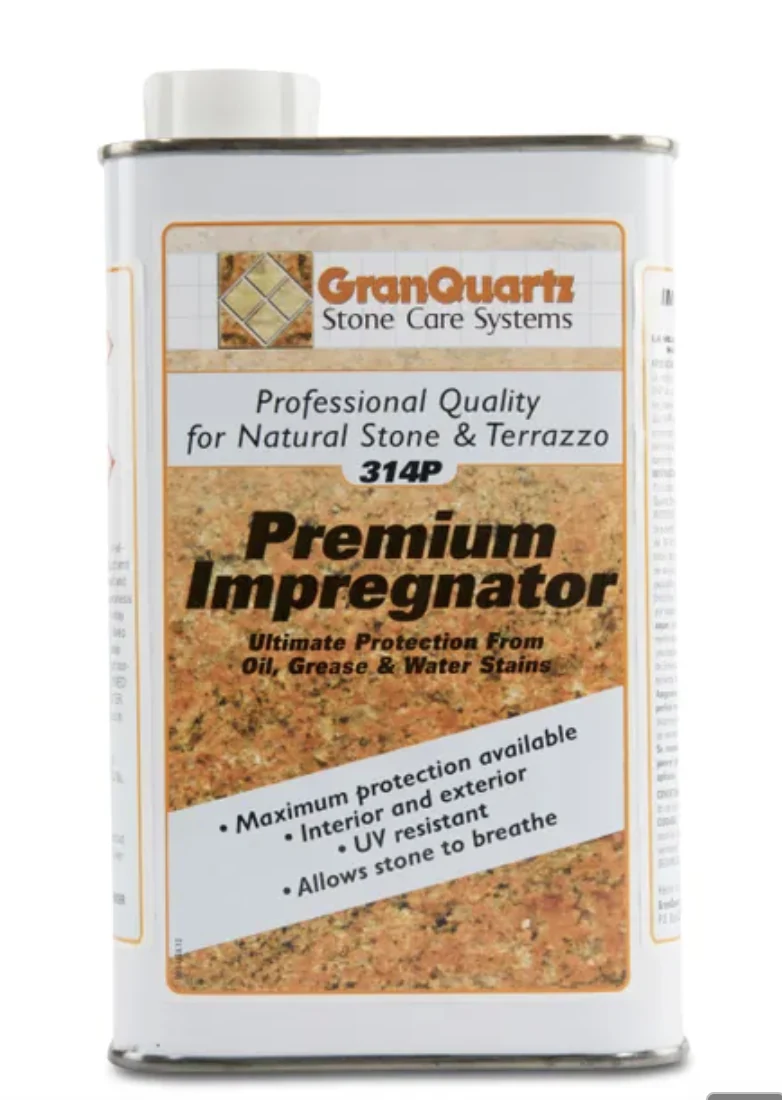
This is the product we use, and these are its actual directions rather than the shorthand version you usually get.
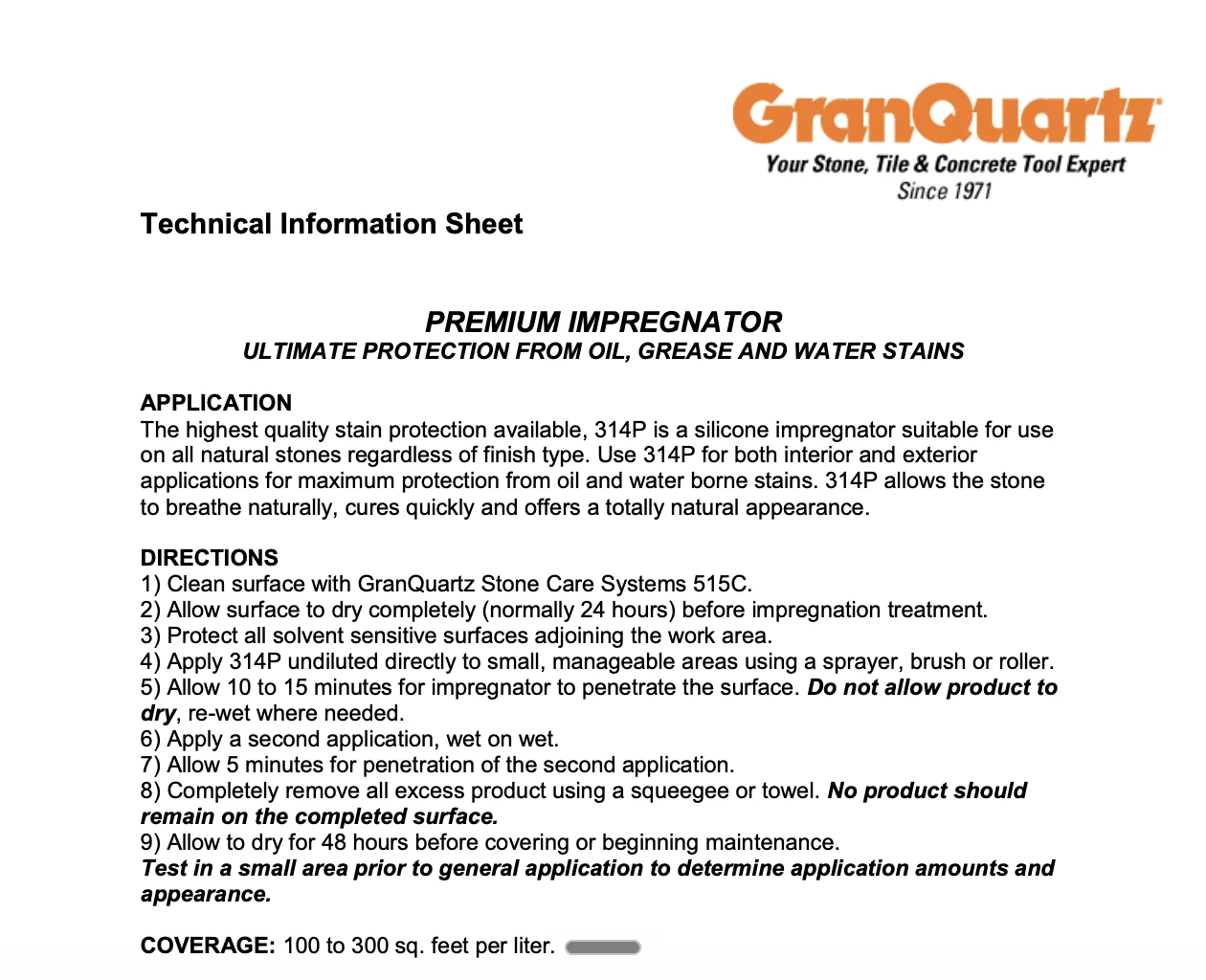
- Clean the surface and let it dry completely. If you just washed it, that means waiting, not wiping.
- Apply it undiluted to a small section at a time with a brush, roller, or cloth. Small sections matter for the next step.
- Give it 10 to 15 minutes to penetrate, and do not let it dry on the surface. Re-wet any area that starts to go dry.
- Apply a second coat wet on wet, and give that 5 minutes.
- Remove every bit of excess with a towel or squeegee. Nothing should remain on the finished surface.
- Let it cure 48 hours before heavy use.
That third step is the one nobody tells you, and it is where the haze comes from. Read it again. Do not let the product dry on the stone.
The label also says to test a small area first. Same reason as everything else in this post. Your stone is not every stone.
Twenty minutes of actual work for a typical kitchen. Once every five to seven years for most granite.
That is the maintenance burden people talk themselves out of natural stone over.
Why Five to Seven Years, Not One
When your countertop is installed, any fabricator worth hiring seals it before they leave. A good impregnator holds for years, not months.
The once-a-year number came from somewhere reasonable. Older sealers were weaker and wore off faster. The products got much better. The advice did not update.
So test annually. Seal when the test tells you to. For most kitchens that is somewhere between year five and year seven, and for the dense stones it is never.
What About Quartzite?
Same test, same answer, usually a shorter interval.
Quartzite runs more porous than most granite, so it tends to want sealing sooner. Some of the whites and light grays are genuinely thirsty. Put water on it, wait fifteen minutes, and let the stone tell you.
Marble is a different conversation, and mostly a different problem. What people call marble stains are usually etching, which sealer does not prevent.
And Quartz?
Never. Not once.
Quartz is nonporous by manufacture. Cambria states plainly that you should not apply any sealer, penetrant, or topical treatment to their surface under any circumstances. Sealing quartz gets you the same hazy film for the same reason, with no upside at all. We wrote about that in more detail here.
If someone is trying to sell you a sealing service for a quartz countertop, that is worth knowing before you write the check.
The Short Version
Do not seal on a schedule. Test on a schedule.
Water, fifteen minutes, look. If it darkened, seal it. If it did not, put the bottle away.
Most granite needs it twice in a decade. Some granite never needs it at all. And the homeowners who end up with a problem are almost never the ones who forgot.
Not sure what you have? Send us a photo of your counter and tell us what the water test did. We will tell you whether it needs sealing and whether the haze you are looking at is sealer residue. You do not have to be a customer. Give us a call.